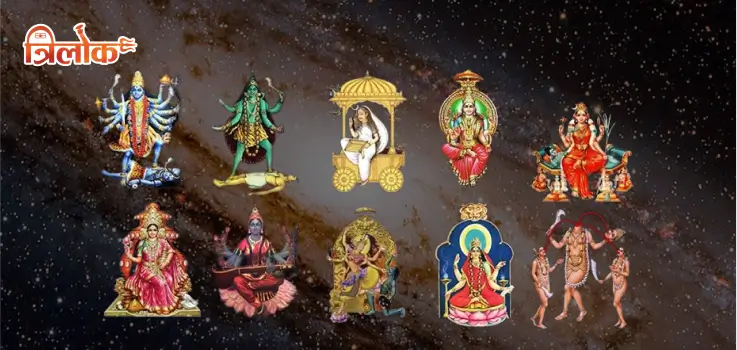
Worship the 10 Mahavidyas in Gupt Navratri
May 08, 2026 Friday
The Ten Mahavidyas: Avatars of Power and Wisdom
1. Goddess Kali: The Foremost Power
Among the ten Mahavidyas, Kali is considered the primary and most powerful. Durga assumed this form specifically to destroy demonic forces. Worship of Kali is performed for deep spiritual attainment. Much like Lord Shiva, she is quick to bless but requires a pure and focused mind.
Significant Temples: Kolkata, Ujjain, and Pavagadh (Gujarat).
2. Tara: The Second Mahavidya
Maharishi Vashistha was the first to worship Goddess Tara. She is the principal goddess for tantrics, bringing financial prosperity and salvation. Historical accounts mention that Vashistha attained many siddhis through her worship in West Bengal.
Significant Temples: Birbhum (West Bengal) and Shimla (Himachal Pradesh).
3. Tripura Sundari (Lalita)
Also known as Raj Rajeshwari and Shodashi, she is worshipped for beauty and sovereignty. Her sacred seat is in Tripura, where she is depicted with four arms and three eyes.
Mantra: Chanting “Ain Hreem Shreem Tripura Sundariye Namah” with Rudraksha beads during Navratri is highly effective.
Significant Temple: Kamakhya (Assam).
4. Bhuvaneshwari: For Fame, Wealth, and Children
Worship of Goddess Bhuvaneshwari (also known as Shatakshi and Shakambhari) is believed to bring intense solar energy. She bestows respect, honor, wealth, and the joy of children upon her devotees.
5. Chhinnamasta: Goddess of Compassion and Sacrifice
Her form represents a severed head and three streams of blood, symbolizing the transcendence of the mind. Worshipping her with a calm mind brings peace, but her fierce rituals can lead to intense spiritual visions.
Significant Temple: Ranchi (Jharkhand), the second most popular Shakti Peeth after Kamakhya.
6. Bhairavi: Dispeller of Fear
Bhairavi frees devotees from all types of fear and worldly bonds. She is the catalyst for progress in business and the effortless attainment of material assets.
Significant Temples: Kamakhya and Varanasi.
7. Dhumavati: Dispeller of Struggles
Goddess Dhumavati represents the void and is considered the one who removes hardships and scarcity. Worshipping her grants a powerful and influential personality. In the Rigveda, she is referred to as ‘Sutra.’
Significant Temple: Datia (Madhya Pradesh).
8. Baglamukhi: For Speech and Victory
The worship of Baglamukhi is performed for mastery over speech and to gain victory over enemies. It is believed that Krishna and Arjuna worshipped her to defeat the Kauravas during the Mahabharata war.
Significant Temples: Datia and Nalkheda (MP), and Kangra (HP).
9. Matangi: For Family Prosperity
Those seeking a successful and prosperous family life should worship Goddess Matangi. She governs the mastery of arts, music, and innate talents, allowing the devotee to gain influence over their world.
Significant Temple: Modheshwar (Gujarat).
10. Kamala: For Wealth and Wisdom
The tenth Mahavidya, Kamala, grants wealth, success in education, and offspring. Her worship makes one rich in both material assets and spiritual wisdom.
Significant Temples: Maharashtra and the sanctum sanctorum at Kamakhya (Assam).
Conclusion
The worship of the 10 Mahavidyas during Gupt Navratri 2026 is a rare opportunity to clear karmic debts and invite divine energy into your life. Whether you seek material success or spiritual enlightenment, these ten forms of the Mother Goddess provide a direct path to fulfillment.