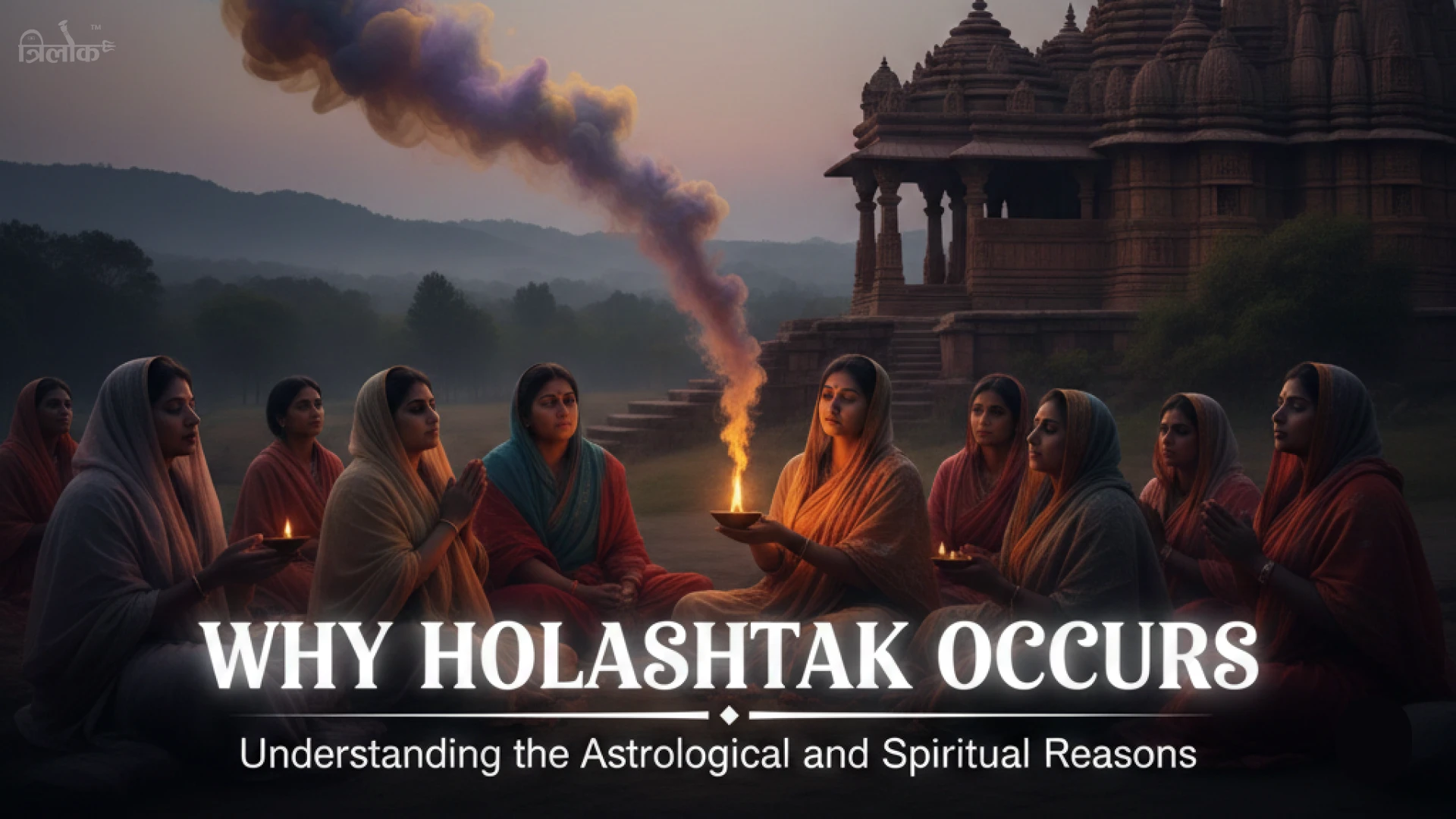
Why Holashtak Occurs, Why Auspicious Work Should Not Be Done
February 16, 2026 Monday
Why Holashtak Occurs, Why Auspicious Work Should Not Be Done
In the Hindu religious Panchang, Holashtak holds a special place. It is the period that lasts from eight days before Holi until the Holika Dahan, which is considered inauspicious according to religious beliefs. During this time, people avoid starting new auspicious tasks, organizing any ceremonial events, or making major decisions. Instead, they focus on meditation, prayers, and spiritual activities. According to the Panchang, Holashtak begins on the eighth day of the Shukla Paksha in the month of Phalguna. Here, we will learn when Holashtak will start in 2026 and the exact date it will begin.
When Will Holashtak Start in 2026?
In 2026, Holashtak will begin on February 24 (Tuesday), on the eighth day of the Shukla Paksha in the month of Phalguna. According to the Panchang, the eighth day of the Shukla Paksha will start at 7:02 AM on February 24 and will continue until the evening of the next day. The start of this date marks the beginning of Holashtak.
Duration of Holashtak in 2026
The period of Holashtak lasts for eight days and continues until the full moon day (the evening before Holi, i.e., Holika Dahan). In 2026, since Holashtak begins on February 24, it will end on March 3, 2026, on the day of Holika Dahan. The full moon day also marks the end of Holashtak, after which the festival of Holi (playing with colors) begins the next day.
Why Does Holashtak Occur?
According to mythological beliefs, King Hiranyakashyapu tortured his son Prahlad for eight days to make him stop worshipping Lord Vishnu. On the eighth day, Hiranyakashyapu’s sister Holika sat in the fire with Prahlad in her lap, and although she had a boon to remain unharmed by fire, she burned to death. During these eight days, Prahlad constantly remembered Lord Vishnu.
These eight days are considered highly significant for spiritual practice.Another belief connected to Holashtak relates to Kamadeva. It is said that, following the request of the gods, Kamadeva tried for eight days to disturb Lord Shiva’s meditation. In anger, Lord Shiva burned Kamadeva to ashes on the day of Phalguna Shukla Ashtami. Additionally, due to the change in seasons during this period, the intensity of planetary influences, negative energy, and disturbances increase, which is why it is advised to avoid auspicious tasks like weddings, housewarmings, or major decisions during Holashtak.
What Should Be Done and Not Done During Holashtak?
During this time, one should avoid performing any auspicious work such as weddings, engagements, housewarmings, land-vehicle purchases, etc.
It is considered best to postpone social and religious ceremonies to avoid any inauspicious effects on one’s life.
This period is ideal for spiritual activities such as devotion, charity, meditation, and fasting.
Spiritual Perspective of Holashtak 2026
Many religious scholars say that during Holashtak, spiritual practices such as charity, devotion, singing hymns, and worshiping Lord Shiva, Vishnu, and Hanuman yield great results. It is a time suitable for self-reflection, mental peace, discipline, and spiritual progress. It is a period to stay cautious from a religious viewpoint and avoid evil, striving for spiritual advancement. If special worship of Lord Narasimha is performed during this time, practitioners will receive immediate benefits.