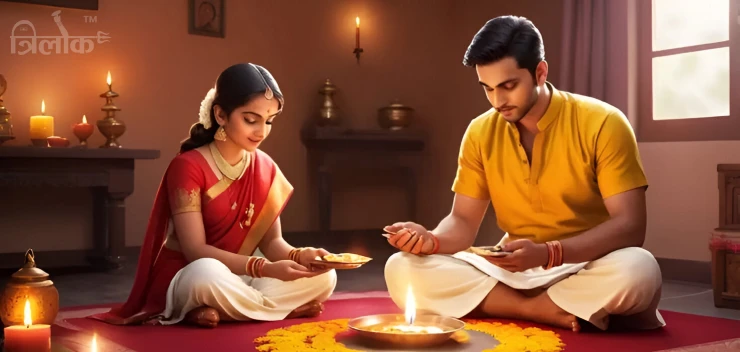
Bhai Dooj 2025 – Story, Significance, Rituals Explained in Detail
October 13, 2025 Monday
Bhai Dooj 2025 – Story and Festival Traditions
The Bhai Dooj festival in 2025 symbolizes love and devotion between brothers and sisters. On this day, sisters perform a special puja for their brothers’ long life and prosperity. Bhai Dooj is not just a ritual but a heartfelt moment where siblings cherish childhood memories and spend quality time together.
Religious and Mythological Significance of Bhai Dooj 2025
People celebrate Bhai Dooj two days after Diwali to honor the bond between brothers and sisters. This tradition has deep religious roots. According to legend, on this day, Yamraj visited his sister Yamuna upon her invitation. She welcomed him with a tilak and lovingly served him a meal. Pleased by her devotion, Yamraj blessed her, saying that any sister who performs this ritual for her brother would see him blessed with long life, happiness, and peace. Since then, the tradition continues with joy and devotion.
In 2025, Dwitiya Tithi will begin on 22 October at 8:16 PM and end on 23 October at 10:46 PM. Therefore, based on the rising moon, Bhai Dooj will be celebrated on 23 October 2025.
The auspicious time for tilak is from 1:13 PM to 3:28 PM.
Regional Names of Bhai Dooj Across India
- India’s cultural diversity reflects beautifully in festivals like Bhai Dooj.
- In Bengal, people call it Bhai Phota.
- In Maharashtra and Goa, it’s known as Bhau Beej.
- In Nepal, the festival is celebrated as Bhai Tihar.
- Despite different names and customs, the festival’s core spirit—love and protection between siblings—remains the same.
How Bhai Dooj Differs from Raksha Bandhan
People call Raksha Bandhan “Rakshika” or “Raksha Sutra Bandhan” in Sanskrit, while Bhai Dooj is known as “Bhagini Hasta Bhojan”, meaning the sister feeds her brother with her own hands. On Raksha Bandhan, the brother invites his sister, ties a Rakhi, and offers gifts. In Bhai Dooj, the sister invites her brother, performs tilak, and lovingly feeds him home-cooked food.
Raksha Bandhan extends the ancient tradition of tying a protective thread, seen in stories involving Indra, King Bali, and Lord Krishna. Bhai Dooj, on the other hand, stands as a separate festival, rooted in the pure bond of Yamraj and Yamuna, hence also called Yam Dwitiya.
Rituals and Remedies for Auspicious Results on Bhai Dooj
Siblings should bathe together in the Yamuna River on Bhai Dooj. This strengthens their bond and brings prosperity to the family. Sisters should light a four-faced lamp outside their house in the name of Yamraj. This pleases Yama and grants the brother a longer life. Brothers should visit their sister’s home and receive the tilak. Sisters should apply tilak, perform aarti, and feed their brother sweets and meals prepared with love. During tilak, sisters should chant the following mantra:
“Ganga puje Yamuna ko, Yami puje Yamraj ko, Subhadra puje Krishna ko, Ganga Yamuna neer bahe, mere bhai ki aayu badhe.”
This enhances the bond and ensures the brother’s well-being. Sisters should wake up early, bathe, and make a chowk (sacred design) with flour. Then seat the brother on it, place flowers, betel leaves, areca nut, and a coin on his head while applying the tilak. The brother should face east during the ritual. Sisters should tie a kalawa (sacred thread) on his wrist and perform aarti. If the sister offers paan (betel leaf) to her brother on this day, it strengthens their bond further.