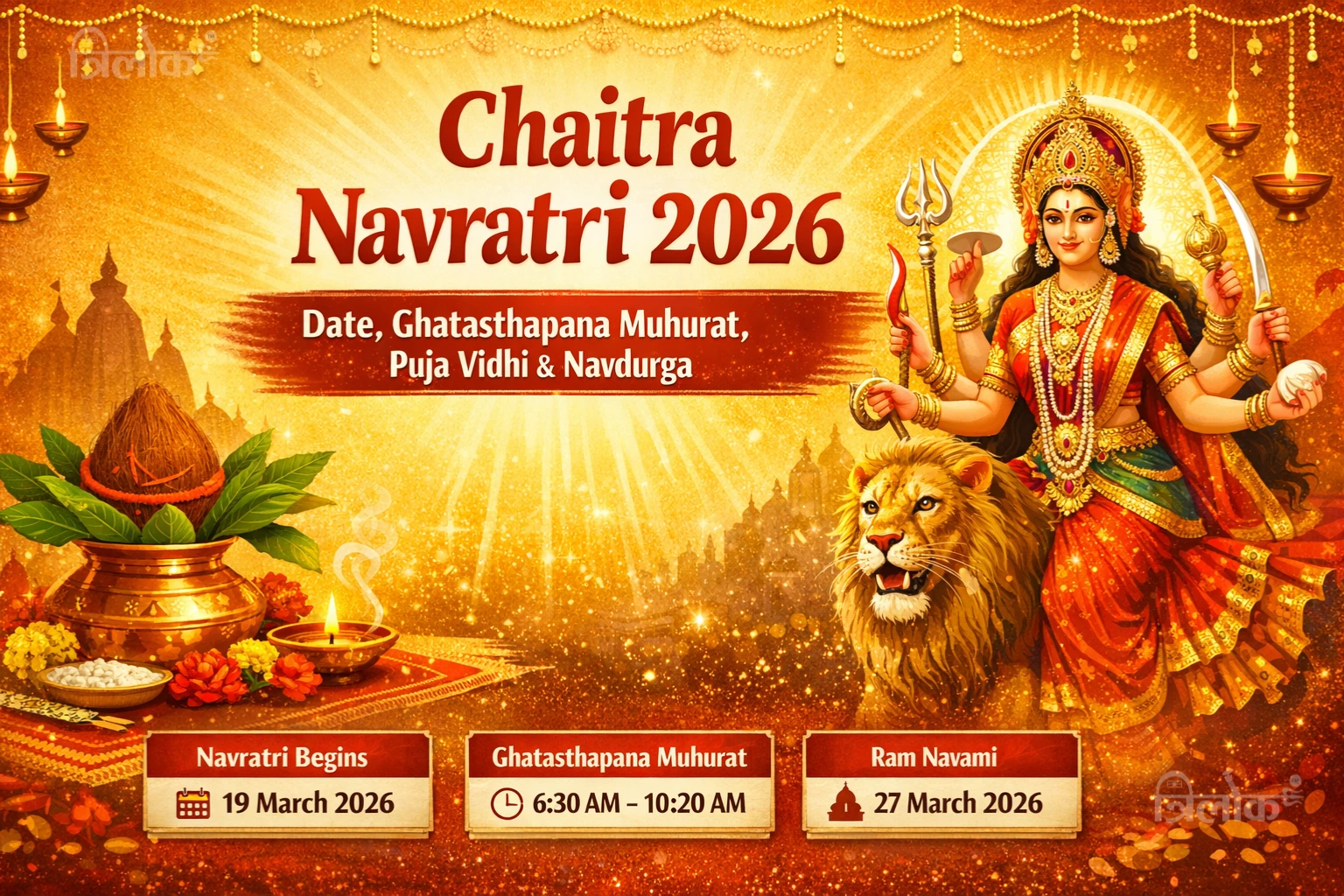
Chaitra Navratri 2026: Date, Ghatasthapana Muhurat, Puja Vidhi & Navdurga
March 13, 2026 Friday
The Sacred Beginning of Chaitra Navratri
Chaitra Navratri stands among the most sacred and spiritually powerful festivals in Hindu tradition. You celebrate this auspicious period during the Chaitra month of the Hindu lunar calendar. In many regions of India, it also marks the beginning of the Hindu New Year and symbolizes renewal, spiritual awakening, and the rise of Durya Maa’s energy.
The word Navratri literally means “nine nights”. During these nine sacred nights, You worship Durga and her nine manifestations, collectively known as the Navadurga.. Each day honors a different form of the Maa Durga’s, and every form represents a unique aspect of Durya Maa’s power and spiritual transformation.
Unlike many celebrations that focus primarily on social festivities, Navratri emphasizes devotion, discipline, and spiritual purification. During this period, you observe fasting, perform sacred rituals, chant powerful mantras, and practice meditation. Through these practices, they seek to connect with the Durya Maa’s energy known as Shakti.
According to Hindu spiritual traditions and yogic philosophy, Navratri is considered an extremely powerful time for spiritual practices. During this sacred period, energy becomes more receptive to devotion and prayer. As a result, many you believe that meditation, mantra chanting, and spiritual discipline practiced during Navratri bring mental clarity, emotional balance, and inner transformation.
In 2026, Chaitra Navratri will begin in March and conclude with Ram Navami, the birth anniversary of Lord Rama. Throughout India, you will celebrate these nine days with deep faith, rituals, and traditional observances.
This article provides a complete guide to Chaitra Navratri 2026, including the festival dates, the auspicious Ghatasthapana Muhurat, step-by-step puja procedures, the significance of the nine forms of Goddess Durga, Navratri fasting rules, and the deeper spiritual meaning behind this sacred festival.
Chaitra Navratri 2026 Date and Calendar
Chaitra Navratri begins on the Pratipada tithi of Shukla Paksha in the Chaitra month according to the Hindu lunar calendar. you observe this sacred festival for nine days and dedicate each day to the worship of Goddess Durga and her nine forms. In many parts of India, this period also marks the beginning of the Hindu New Year and symbolizes renewal, devotion, and spiritual awakening.
During these nine days, you perform daily prayers, observe fasting, chant sacred mantras, and participate in special rituals dedicated to the goddess. Each day holds spiritual importance because you worship a different manifestation of Goddess Durga, known collectively as the Navadurga. Through devotion and discipline, you seek blessings for health, prosperity, protection, and spiritual growth.
The festival concludes with Ram Navami, which celebrates the birth of Lord Rama, the seventh incarnation of Lord Vishnu. Therefore, Chaitra Navratri represents not only the worship of Durya Maa’s power but also the victory of righteousness and dharma.
Chaitra Navratri 2026 Important Dates
|
Event |
Date |
Day |
|
Chaitra Navratri Begins |
19 March 2026 |
Thursday |
|
Ghatasthapana (Kalash Sthapana) |
19 March 2026 |
Thursday |
|
Durga Ashtami |
26 March 2026 |
Thursday |
|
Ram Navami / Navratri Ends |
27 March 2026 |
Friday |
During this sacred period, temples and households across India organize prayers, devotional singing, and spiritual gatherings. As a result, the festival becomes a time of devotion, cultural celebration, and spiritual reflection for millions of you.
Ghatasthapana Muhurat 2026
Ghatasthapana, also known as Kalash Sthapana, marks the formal beginning of Chaitra Navratri worship. On this sacred day, you establish the kalash and invite the Durya Maa’s presence of Goddess Durga into their homes or temples. Therefore, performing this ritual during the correct muhurat holds great importance in Hindu tradition.
According to the Hindu calendar, you will perform Ghatasthapana on 19 March 2026 (Thursday), the first day of Chaitra Navratri. The ritual should take place during an auspicious time to ensure that the worship begins with positive spiritual energy.
Ghatasthapana Date
19 March 2026
Auspicious Muhurat
Approximately 06:30 AM to 10:20 AM
During this time, you establish the kalash, light a sacred lamp, and begin the nine-day worship of Goddess Durga. The kalash represents prosperity, creation, and Durya Maa’s energy. Moreover, it becomes the spiritual center of Navratri rituals throughout the festival.
For this reason, you prepare the altar carefully, offer prayers with devotion, and maintain daily worship during all nine days of Navratri. Through this ritual, they seek the blessings of Goddess Durga for protection, prosperity, and spiritual well-being.
Step-by-Step Ghatasthapana Puja Vidhi
1. Clean and Prepare the Puja Area
First, clean the puja space to create a pure and peaceful environment. Sprinkle Ganga jal and decorate the altar with flowers, rangoli, and a red cloth before placing the idol or image of Durga.
2. Prepare the Soil and Sow Barley Seeds
Fill a small pot with clean soil and sow barley seeds (jau). These seeds symbolize growth, prosperity, and the blessings of Durga during Navratri.
3. Prepare the Kalash
Fill a copper or brass kalash with clean water and place sacred items like betel nut, rice, and a coin inside. The kalash represents the source of life and energy.
4. Tie the Sacred Thread and Apply Tilak
Tie a red sacred thread (kalava) around the kalash and apply kumkum and turmeric tilak. This step symbolizes protection, purity, and auspiciousness.
5. Place Mango Leaves on the Kalash
Arrange five mango leaves around the opening of the kalash. These leaves represent the five elements of nature and invite positive energy.
6. Place the Coconut on the Kalash
Place a coconut wrapped in red or yellow cloth on top of the kalash. The coconut symbolizes purity, consciousness, and devotion to Durga.
7. Establish the Kalash on the Soil Pot
Place the prepared kalash on the container where barley seeds are sown. This represents the connection between nature, life, and energy.
8. Light the Sacred Lamp (Akhand Jyot)
Light an oil lamp near the altar, often kept burning for all nine days. The flame symbolizes the knowledge and blessings of Durga.
9. Invoke Goddess Durga
Offer flowers, incense, fruits, and prayers while chanting sacred texts such as Durga Saptashati to invite the Goddess into your home.
10. Take the Sankalp (Sacred Vow)
Finally, take a sankalp by mentally committing to observe Navratri with devotion, prayer, and fasting for the next nine days.
If you want to know the complete Ghatasthapana ritual in detail, read our full guide on Ghatasthapana.
The Nine Forms of Goddess Durga Worshipped During Navratri (Navadurga)
During Navratri, you worship the nine forms of Durga, which are collectively called the Navadurga.. Each form represents a unique dimension of cosmic power and spiritual evolution. Therefore, you dedicate each day of Navratri to honoring a specific manifestation of the Durya Maa’s .
These nine forms symbolically represent the spiritual journey of human consciousness. At the beginning, the journey focuses on strength, discipline, and devotion. Gradually, it leads to wisdom, spiritual awareness, and the realization of Durga.. you believe that sincere worship of each form removes negativity, purifies the mind, and attracts prosperity, protection, and spiritual progress.
Moreover, each day of Navratri includes specific rituals, offerings, and prayers dedicated to the respective form of the Goddess. Through these sacred practices, you deepen their connection with the Durya Maa’s energy known as Shakti.
Below is a detailed explanation of the nine forms of Maa Durga worshipped during Navratri.
Day 1 – Maa Shailputri
Date: 19 March 2026
Maa Shailputri is the first manifestation of Goddess Durga and is worshipped on the opening day of Navratri. The name Shailputri means “daughter of the mountains.” According to Hindu mythology, she is the daughter of King Himavan, the ruler of the Himalayas.
Scriptures also describe Maa Shailputri as the reincarnation of Goddess Sati, the first consort of Lord Shiva. After Sati sacrificed herself during the yajna organized by her father, King Daksha, she was reborn as Parvati, the daughter of the Himalayas.
Maa Shailputri rides a bull named Nandi and holds a trident in one hand and a lotus flower in the other. Her Durya Maa’s form represents strength, purity, and stability.
Spiritual Significance
The worship of Maa Shailputri marks the beginning of the spiritual journey. In yogic philosophy, she is associated with the Muladhara Chakra, the root energy center located at the base of the spine. Awakening this chakra brings grounding, stability, and physical vitality.
Puja Rituals
On the first day of Navratri, you establish the Ghatasthapana (Kalash) and offer prayers to Maa Shailputri. In addition, you chant her mantras and offer ghee during the worship.
Offering: Ghee
Blessing: Physical strength, good health, and stability in life.
Day 2 – Maa Brahmacharini
Date: 20 March 2026
Maa Brahmacharini represents the form of Goddess Parvati during her period of intense penance and spiritual discipline. The name Brahmacharini means “one who follows the path of austerity and meditation.”
According to Hindu scriptures, Goddess Parvati performed severe penance for many years to attain Lord Shiva as her husband. During this time, she lived a life of simplicity, devotion, and unwavering determination.
Maa Brahmacharini appears walking barefoot while holding a japa mala in one hand and a kamandalu in the other. Her form reflects calmness, dedication, and spiritual strength.
Spiritual Significance
Maa Brahmacharini symbolizes discipline, patience, and inner strength. She teaches you the importance of perseverance and devotion in spiritual practice. She is also associated with the Swadhisthana Chakra, which governs creativity, emotions, and self-control.
Puja Rituals
you worship Maa Brahmacharini by offering fruits, sugar, and flowers. Moreover, chanting her mantras is believed to strengthen wisdom and emotional balance.
Offering: Sugar
Blessing: Wisdom, patience, and emotional stability.
Day 3 – Maa Chandraghanta
Date: 21 March 2026
Maa Chandraghanta is the third form of Goddess Durga and represents courage, grace, and Durya Maa’s protection. Her name comes from the crescent moon on her forehead, which resembles the shape of a bell.
She rides a lion or tiger and is depicted with ten hands holding weapons such as a sword, trident, mace, and bow. These weapons symbolize her power to destroy evil forces and protect you.
Despite her warrior appearance, her expression reflects compassion and serenity.
Spiritual Significance
Maa Chandraghanta symbolizes bravery and fearlessness. you believe that worshipping her removes fear, anxiety, and negative influences. She is associated with the Manipura Chakra, which represents confidence and inner strength.
Puja Rituals
you offer milk, kheer, and sweets while chanting Durga mantras. As a result, her worship is believed to bring peace, prosperity, and courage.
Offering: Milk or kheer
Blessing: Protection from enemies, courage, and peace of mind.
Day 4 – Maa Kushmanda
Date: 22 March 2026
Maa Kushmanda is the fourth manifestation of Goddess Durga and is believed to be the creator of the universe. According to Hindu mythology, when the universe was filled with darkness, she created the cosmic world with her Durya Maa’s smile.
Her name derives from three Sanskrit words:
-
Ku – little
-
Ushma – warmth or energy
-
Anda – cosmic egg
Therefore, Maa Kushmanda represents the cosmic energy responsible for creation.
She rides a lion and appears with eight arms holding weapons, a rosary, and a pot of nectar.
Spiritual Significance
Maa Kushmanda represents vitality, cosmic power, and Durya Maa’s energy. She is associated with the Anahata Chakra, the heart energy center that governs compassion and balance.
Puja Rituals
You offer sweets such as malpua and fruits during her worship. Consequently, you believe her blessings bring prosperity, success, and good health.
Offering: Malpua
Blessing: Energy, prosperity, and physical well-being.
Day 5 – Maa Skandamata
Date: 23 March 2026
Maa Skandamata is the fifth form of Goddess Durga and the mother of Lord Kartikeya (Skanda), the commander of the Durya Maa’s army.
She rides a lion and carries the infant Kartikeya in her lap. She has four arms and holds lotus flowers while one hand blesses you.
Spiritual Significance
Maa Skandamata symbolizes motherly love, compassion, and nurturing energy. you believe that her blessings bring happiness to families and protection to children. She is associated with the Vishuddha Chakra, which governs communication and spiritual expression.
Puja Rituals
you offer bananas and flowers while praying for family harmony and prosperity.
Offering: Bananas
Blessing: Family happiness, protection of children, and prosperity.
Day 6 – Maa Katyayani
Date: 24 March 2026
Maa Katyayani is one of the fiercest forms of Goddess Durga. According to Hindu mythology, she was born from the collective Durya Maa’s energy of the gods to defeat the demon Mahishasura.
She rides a lion and holds a sword and a lotus in her hands.
Spiritual Significance
Maa Katyayani represents courage, justice, and determination. She protects righteousness and destroys evil forces. In yogic philosophy, she is associated with the Ajna Chakra, which governs intuition and spiritual insight.
Puja Rituals
Many unmarried women worship Maa Katyayani to seek blessings for a suitable life partner.
Offering: Honey
Blessing: Strength, courage, and harmony in marriage.
Day 7 – Maa Kalaratri
Date: 25 March 2026
Maa Kalaratri is the seventh form of Goddess Durga and represents the destruction of darkness and ignorance.
Her appearance is fierce, with dark skin, flowing hair, and a powerful aura. She rides a donkey and carries a sword and iron hook.
Despite her terrifying form, she protects you and removes obstacles.
Spiritual Significance
Maa Kalaratri removes fear, negativity, and evil influences. She symbolizes the destruction of ignorance and the awakening of wisdom. She is associated with the Sahasrara Chakra, the highest energy center representing spiritual enlightenment.
Puja Rituals
you offer jaggery and chant her mantras to seek protection from negative forces.
Offering: Jaggery
Blessing: Fearlessness, protection, and spiritual strength.
Day 8 – Maa Mahagauri
Date: 26 March 2026 (Durga Ashtami)
Maa Mahagauri represents purity, serenity, and Durya Maa’s grace. According to mythology, she regained her radiant complexion after performing intense penance.
She rides a bull and carries a trident and a drum.
Spiritual Significance
Maa Mahagauri symbolizes purification and spiritual transformation. you believe her blessings remove past sins and bring peace and harmony.
Kanya Puja
On Durga Ashtami, you perform Kanya Puja, where young girls are worshipped as manifestations of the Durya Maa’s . you offer them food, gifts, and blessings.
Offering: Coconut
Blessing: Peace, happiness, and fulfillment of wishes.
Day 9 – Maa Siddhidatri
Date: 27 March 2026 (Ram Navami)
Maa Siddhidatri is the ninth and final form of Goddess Durga. She grants siddhis, or Durya Maa’s spiritual powers, along with wisdom and spiritual knowledge.
She sits on a lotus and holds a discus, mace, conch, and lotus.
Spiritual Significance
Maa Siddhidatri represents the completion of the spiritual journey. you believe that her blessings bring wisdom, Durya Maa’s grace, and spiritual fulfillment.
Puja Rituals
On the final day of Navratri, you offer halwa and puri and perform special prayers to conclude the festival.
Offering: Halwa and puri
Blessing: Spiritual enlightenment, success, and prosperity.
Navratri Fasting Rules and Food Guidelines
Fasting during Navratri plays an important role in spiritual discipline and devotion. you observe fasting not only as a religious practice but also as a way to purify the body and mind. During these nine sacred days, many you reduce regular food consumption and instead follow a sattvic diet that supports spiritual focus and physical balance.
Moreover, fasting during Navratri symbolizes self-control, devotion, and inner purification. Through prayer, meditation, and disciplined eating habits, you aim to strengthen their spiritual connection with Goddess Durga.
Common Navratri Fasting Rules
you follow certain traditional guidelines while observing Navratri fasting. These practices help maintain purity and spiritual focus throughout the festival.
-
Begin the day with an early morning bath and prayer to Goddess Durga.
-
Perform daily puja and chant Durga mantras or Durga Chalisa.
-
Avoid onion, garlic, and non-vegetarian food during the fasting period.
-
Consume only sattvic food that promotes purity and balance.
-
Maintain cleanliness and a peaceful environment in the home temple.
-
Light a diya in the puja area and continue daily worship throughout Navratri.
In addition, some you observe a full fast, while others follow a partial fast by eating specific vrat foods once or twice a day. The choice usually depends on personal tradition and physical capacity.
Foods Allowed During Navratri Fast
During Navratri fasting, you prepare meals using ingredients that align with vrat traditions. These foods provide energy while maintaining dietary purity.
Common Navratri fasting foods include:
-
Kuttu Atta (Buckwheat Flour) – used to prepare puris or pakoras
-
Singhara Atta (Water Chestnut Flour) – commonly used in vrat dishes
-
Sabudana (Tapioca Pearls) – used in sabudana khichdi or vada
-
Potatoes – prepared as vrat-friendly dishes
-
Fruits and Dry Fruits – provide natural energy and nutrients
-
Milk and Dairy Products – such as yogurt, paneer, and ghee
These foods help maintain strength and energy while supporting the spiritual purpose of fasting.
Importance of Sattvic Food During Navratri
Sattvic food plays an essential role during Navratri because it promotes clarity, calmness, and spiritual awareness. Such foods are simple, natural, and easy to digest. Therefore, you avoid heavy or tamasic foods that may create lethargy or distraction.
By following these fasting guidelines, you maintain both physical discipline and spiritual focus throughout the Navratri festival. As a result, fasting becomes not just a dietary practice but a meaningful path toward devotion, self-control, and spiritual growth.
Spiritual Significance of Navratri
Navratri holds profound spiritual significance in Hindu tradition. Beyond being a festival of celebration, it represents the victory of Durya Maa’s energy over negativity and ignorance. During these nine sacred nights, you worship Goddess Durga and seek her blessings for strength, protection, and spiritual progress.
Moreover, Navratri symbolizes the awakening of inner power. According to Hindu philosophy, the Durya Maa’s energy known as Shakti governs creation, preservation, and transformation in the universe. Therefore, by worshipping Goddess Durga during Navratri, you honor this cosmic energy and invite positive transformation into their lives.
Awakening of Inner Energy
Spiritual traditions often associate Navratri with the awakening of inner consciousness. According to yogic philosophy, the human body contains seven energy centers known as chakras. Through prayer, meditation, and devotion during Navratri, you aim to activate these energy centers and elevate their spiritual awareness.
As a result, many you use this sacred period to practice meditation, mantra chanting, and self-reflection.
Purification of Mind and Body
Navratri also represents a period of purification. you observe fasting, maintain discipline, and avoid negative habits during these nine days. In addition, many people focus on prayer and spiritual reading to cultivate peace and clarity.
Through these practices, you cleanse both the body and the mind. Consequently, they experience greater emotional balance, mental clarity, and spiritual harmony.
Celebration of Durya Maa’s Power
Most importantly, Navratri celebrates the Durya Maa’s energy that sustains the universe. Goddess Durga represents strength, compassion, protection, and wisdom. By worshipping her different forms during Navratri, you recognize the power of Shakti that exists within the universe and within themselves.
Therefore, Navratri becomes not only a religious observance but also a powerful spiritual journey that encourages devotion, discipline, and inner transformation.
Cultural Celebrations of Navratri Across India
Navratri is celebrated across India with deep devotion and vibrant cultural traditions. Although the spiritual purpose of the festival remains the same—worshipping Goddess Durga—different regions express their devotion through unique rituals, customs, and celebrations. As a result, Navratri becomes not only a religious observance but also a rich cultural experience across the country.
North India
In North India, Chaitra Navratri is mainly celebrated through fasting, prayer, and temple worship. You perform daily puja of Durga and recite sacred texts such as the Durga Saptashati. Many communities also organize Ram Leela performances that depict the life of Rama, and the celebrations conclude on Ram Navami.
Gujarat
In Gujarat, Chaitra Navratri is celebrated with devotion and cultural enthusiasm. You worship Durga and observe fasting, perform daily puja, and visit temples during the nine days of Navratri. In many places, people also organize traditional dances like Garba and Dandiya Raas, where participants wear colorful attire and dance in circles around a decorated lamp or the idol of the Goddess, creating a vibrant festive atmosphere.
Maharashtra
In Maharashtra, Chaitra Navratri celebrations often coincide with Gudi Padwa, which marks the beginning of the Hindu New Year. On this occasion, families offer special prayers to Durga, decorate their homes with flowers and lamps, and hoist the traditional Gudi outside their homes. Many You also visit temples to participate in community prayers, devotional singing, and festive gatherings.
South India
In South India, Chaitra Navratri is celebrated with devotion and simple traditional rituals. Families begin the festival with Kalash Sthapana and worship Durga and her nine forms for nine days. You visit temples, perform daily puja, chant prayers, and observe fasting. On the final day, people celebrate Ram Navami, marking the birth of Rama, with special prayers, bhajans, and temple celebrations.
Through these diverse traditions, Navratri reflects the cultural richness of India while maintaining its central theme of devotion to Goddess Durga. Consequently, the festival unites communities through faith, celebration, and shared spiritual heritage.
Conclusion: Celebrating the Durya Maa’s Energy of Chaitra Navratri
Chaitra Navratri is one of the most sacred festivals in Hindu tradition, celebrating the Durya Maa’s power of Goddess Durga and the spiritual awakening of you. Over these nine days, people dedicate themselves to prayer, fasting, meditation, and devotion while worshipping the nine Maa’s forms of the Goddess.
The festival begins with Ghatasthapana, which symbolizes the arrival of Durya Maa’s energy, and continues with daily rituals that honor the Navadurga. Through these sacred practices, you seek strength, protection, prosperity, and spiritual growth. Moreover, Navratri encourages self-discipline, inner purification, and devotion to the Durya Maa’s.
In 2026, Chaitra Navratri will begin on 19 March and conclude with Ram Navami (blog link) on 27 March, marking the birth anniversary of Lord Rama. Throughout India, you will celebrate these nine sacred days with deep faith, cultural traditions, and spiritual practices.
By observing Navratri with sincerity and devotion, you invite the blessings of Goddess Durga and move toward inner peace, prosperity, and spiritual transformation.