Jagannath Puri Rath Yatra 2026: Complete Guide to Ancient History, Ritual Timelines, Scientific Anomalies, and Home Celebration Protocols
July 14, 2026 Tuesday
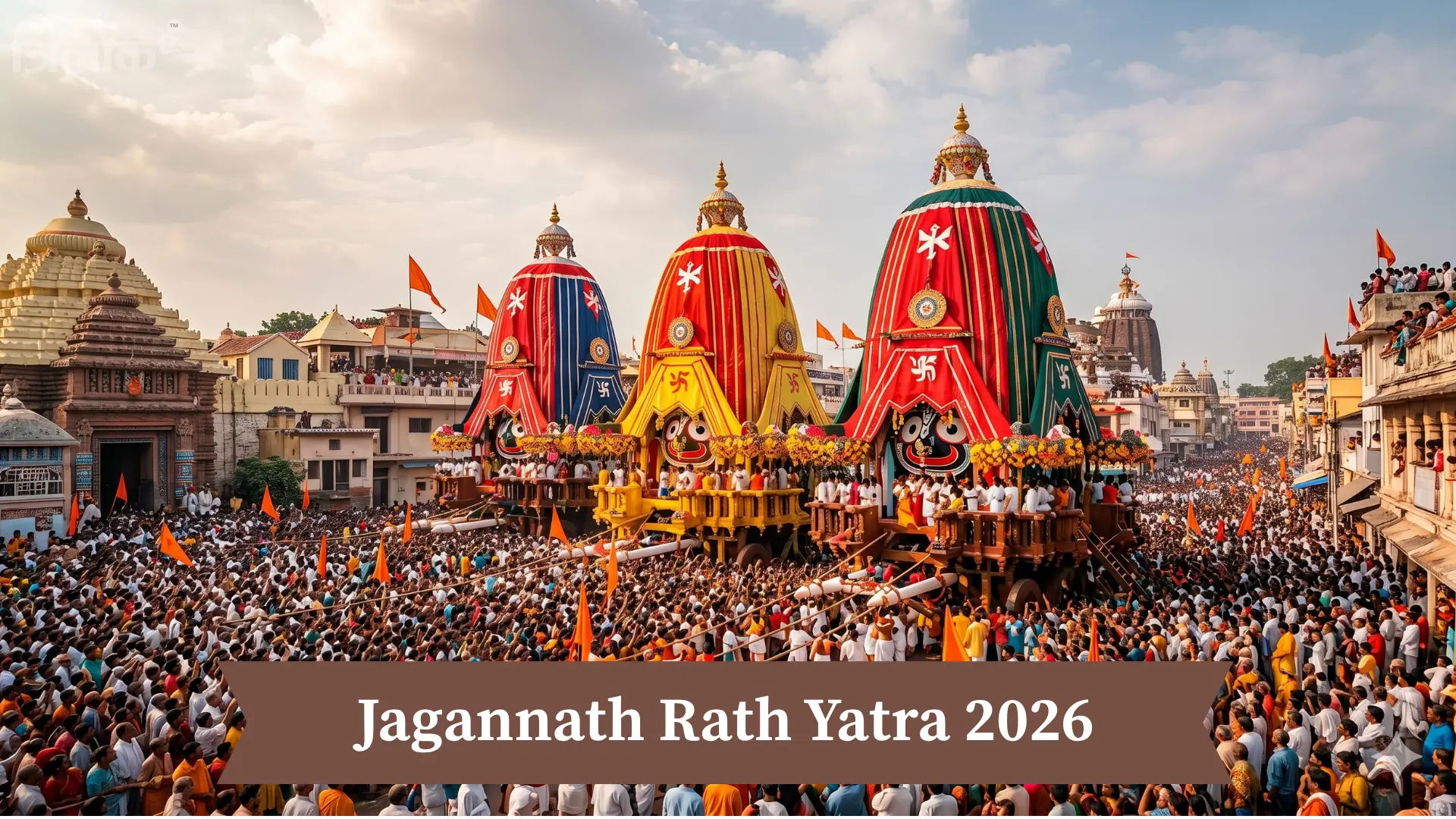
The coastal city of Puri, Odisha, is preparing for one of the largest spiritual gatherings on Earth. The annual Jagannath Puri Rath Yatra 2026 begins on July 16, 2026. Millions of devotees will line the Bada Danda(Grand Road) to witness and pull the massive wooden chariots.
This blog breaks down the ancient origins, hidden timelines, and step-by-step home rituals for this historic event.
Jagannath Rath Yatra 2026 Calendar: Crucial Dates to Remember
The Chariot Festival follows the Ashadha Shukla Dwitiya tithi (the second day of the bright fortnight in the Hindu month of Ashadha). To plan your personal observations, track these vital dates for the 2026 festival cycle:
| Festival Milestone | Date (2026) | Spiritual Significance & Ritual |
|---|---|---|
| Snana Purnima | June 28, 2026 | The ceremonial bathing ritual using 108 pots of sacred water. |
| Anavasara Period | June 29 – July 15, 2026 | The 15-day isolation phase where the deities recover from a fever. |
| Rath Yatra Day | July 16, 2026 | The grand chariot procession starts toward the Gundicha Temple. |
| Hera Panchami | July 20, 2026 | Goddess Lakshmi visits the chariots in anger. |
| Bahuda Yatra | July 24, 2026 | The formal return journey to the main Jagannath temple. |
| Suna Besha | July 25, 2026 | The golden attire ceremony where the deities wear pure gold armor. |
| Niladri Bijay | July 27, 2026 | The final return of the idols to the inner sanctum (Ratnabedi). |
Origins: How Did Jagannath Come Into Existence?
The creation of the unique, unfinished forms of Lord Jagannath, Balabhadra, and Subhadra is recorded in ancient regional texts.
The tribal chief Viswavasu secretly worshipped a blue stone form of Vishnu named Nila Madhava in a dense forest. King Indradyumna, desperate to locate this manifestation, dispatched a scholar named Vidyapati to find it. Vidyapati married the chief’s daughter and managed to visit the secret location by dropping mustard seeds along the path, which bloomed after the rains to reveal the trail.
When King Indradyumna reached the spot, Nila Madhava had vanished. A celestial voice instructed the king to construct a temple and carve figures from a giant log of neem wood found floating near the Puri coast.
An elderly carpenter appeared, matching the description of the heavenly architect Vishwakarma. He agreed to carve the forms under one condition: he must lock himself inside the workshop for 21 days without any interruption.
Anxious due to the absolute silence, the queen pressed the king to open the doors on the 14th day. Upon entering, they found the carpenter had vanished, leaving behind three unfinished wooden shapes with large round eyes and short, handless limbs. A voice from above instructed the king to install and consecrate these raw, earthy forms exactly as they were.
The Philosophy: Why Did the Rath Yatra Start?
Traditional temple spaces historically restricted entry based on strict social rules, preventing many from viewing the inner sanctum. The Jagannath tradition broke this barrier.
The word Jagannath translates directly to “Lord of the Universe.” The festival started to allow the deity to leave the dark inner chamber and walk among regular people, regardless of their background, caste, or nationality.
To reinforce this message of absolute human equality, the reigning King of Puri performs the Chhera Pahanra ritual. He uses a golden broom to sweep the dust and spray fragrant water around the wooden wheels before the common public pulls the massive ropes.
The Sacred Domestic Dispute: Why Lakshmi Ji Left Narayana
The festival features a uniquely human narrative highlighting the relationship between Lord Jagannath and his wife, Goddess Lakshmi. This event is observed on the fifth day as Hera Panchami.
When setting out on his nine-day stay at the Gundicha Temple, the Lord leaves Goddess Lakshmi behind at the main complex, promising a swift return. By the fifth day, frustrated by his prolonged absence, the goddess travels to the Gundicha Temple with her attendants.
Finding the doors locked against her, she orders her staff to break a piece of wood from the Lord’s primary chariot, Nandighosha, as a sign of her anger. She then flees back to the main shrine via a secluded lane (Hera Gohiri Sahi) to avoid an immediate confrontation.
Lesser-Known Scientific Anomalies of Puri Temple
The 12th-century Jagannath temple structure presents several structural and environmental anomalies that challenge regular physics:
- Shadowless Dome: The main architecture of the temple is engineered such that its top structure casts no visible shadow on the ground at any hour of the day.
- The Flag Mystery: The triangular flag fixed to the top apex always waves in the exact opposite direction of the prevailing wind currents.
- The Thermal Stack Kitchen: The temple kitchen cooks food using seven earthen pots stacked directly on top of each other over a single fire. The top-most pot always cooks completely first, while the bottom pot closest to the flames cooks last.
- No Metal Nails: The massive chariots (Nandighosha, Taladhwaja, and Darpadalana) are built fresh every year entirely from wood using traditional interlocking joinery, without a single iron nail.
Step-by-Step Guide: Celebrating Rath Yatra at Home
If you cannot travel to Puri this year, you can invite the protective energies of the festival into your household by following this structured home guide:
- Purify the Altar Space (6:00 AM – 7:00 AM):Wake up during dawn hours. Clean your domestic altar completely and wipe down your images or small metal brass idols of the deities.
- Prepare and Offer Satvik Bhog (11:30 AM – 1:00 PM):Prepare a traditional, zero-onion, zero-garlic meal. Cook a simple yellow lentil khichdi or sweet rice pudding (Kheer) and offer it to the household altar.
- Perform evening Arati and Chanting (6:30 PM – 7:30 PM):Light a fresh cow ghee lamp. Chant the simple “Mahamantra” or repeat “Jai Jagannath” with family members to mark the time the chariots reach their destination.
- Engage in Social Charity (Sunset onwards):Honor the festival’s core virtue of social equality by donating grain, pulses, or clothing to local individuals in need.
Conclusion
The Jagannath Rath Yatra is an enduring example of accessible spiritual truth. From the unique woodcarving traditions of Vishwakarma to the practical lessons of the Hera Panchami ritual, the festival reminds us that spiritual growth does not happen in isolated isolation. When the great wooden wheels roll out onto the streets of Puri this year, they carry a simple message: ultimate truth lives openly among regular individuals, moving along the shared paths of everyday life.