42
Know What Are the 16 Sanskaras (16 Hindu Rites of Passage)
October 13, 2025 Monday
Know What Are the 16 Sanskaras
Since ancient times, the tradition of performing these 16 sanskaras has continued. Each sanskara holds its own significance. A person who does not perform these sixteen sanskaras is considered to have lived an incomplete life.
These are the sixteen sanskaras –
- Garbhaadhan Sanskara – This sanskara helps in obtaining a worthy, virtuous, and ideal child. Scriptures prescribe this rite for conceiving the desired child. This sanskara leads to lineage continuation.
- Punsavan Sanskara – This sanskara is performed for the intellectual and mental development of the unborn child. Its major benefits include the birth of a healthy, beautiful, and virtuous child.
- Seemantonnayan Sanskara – This sanskara is performed in the fourth, sixth, or eighth month of pregnancy. At this time, the fetus becomes capable of learning. To instill good qualities, behavior, and karma, the mother practices righteous conduct, lifestyle, and behavior.
After Birth 16 Sanskars
- Jaatkarm Sanskara – This sanskara is performed immediately after the child’s birth to remove various defects. The child is given honey and ghee, and Vedic mantras are chanted for good health and longevity.
- Naamkaran Sanskara – On the 11th day after birth, this sanskara is performed. A Brahmin selects the child’s name based on astrology.
- Nishkraman Sanskara – Nishkraman means taking out. This sanskara is performed in the fourth month after birth. The body is made of earth, water, fire, air, and sky (the five elements). So, the father prays to these deities for the child’s welfare and long life.
- Annaprashan Sanskara – This sanskara is done when the child starts teething, around 6–7 months old. It marks the beginning of solid food intake.
- Mundan Sanskara – This sanskara is performed when the child turns one year old, or at the age of three, five, or seven. The child’s hair is shaved. This strengthens the head and sharpens intelligence.
Vidya Aarambh 16 Sanskaras
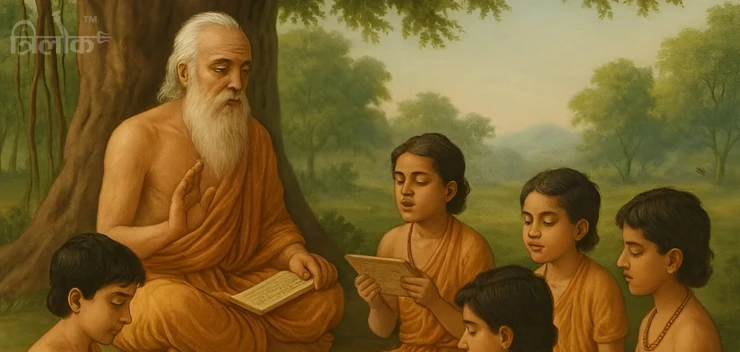
- Vidyarambh Sanskara – This sanskara introduces the child to formal education. The child is familiarized with basic learning.
- Karnavedh Sanskara – In this sanskara, ears are pierced. There are two reasons: for wearing ornaments and for acupuncture benefits. It improves blood flow to the brain, enhances hearing, and prevents many diseases.
- Upanayan or Yagyopaveet Sanskara – ‘Upa’ means near, and ‘nayan’ means to take. Taking the child to the guru is called Upanayan Sanskara. It continues today. The sacred thread (Yagyopaveet) has three strands representing Brahma, Vishnu, and Mahesh. This sanskara gives strength, energy, and brilliance.
- Vedarambh Sanskara – Through this sanskara, the person is taught the knowledge of the Vedas.
- Keshant Sanskara – Keshant means the end of hair. It is done before formal education. It is believed that the child’s original hair comes from the parents in the womb. Removing them purifies the child. Purification is essential before learning so the brain functions properly.
Vivahadi 16 sanskaras
- Samavartan Sanskara – Samavartan means returning. After completing education at the ashram or gurukul, this sanskara reintegrates the person into society. It prepares the student psychologically for the struggles of life.
- Vivah Sanskara – This is a religious duty. Vivah Sanskara is the most important of all. The bride and groom pledge to uphold dharma together. Through marriage, they contribute to the continuation of creation.
- Antyeshti Sanskara – Antyeshti means final rites. According to scriptures, after death, the body is offered to fire. Even today, fire is taken from the house ahead of the funeral procession.